ABOUT ME
 What we see isn’t simply a picture of the outside world. It’s created by our brains through intricate processes that turn patterns of light first sensed by our eyes into meaningful experiences. This process relies heavily on context: what is in the surrounding environment, what happened in the recent past, and internal goals all jointly shape visual experience. Context includes all these dimensions and dynamically shapes how we perceive and interpret the world.
My research asks how the brain transforms sensory input into stable yet flexible perceptual and cognitive representations, and how processes such as attention and working memory reshape them. I identify canonical neural computations and test whether they generalize across brain areas, sensory modalities, species, and levels of measurement. To do so, I combine computational modeling with psychophysics, eye tracking, intracranial and multi-unit electrophysiology, and (ultra-high field) fMRI.
I am currently a postdoctoral researcher working with Serge Dumoulin at the Spinoza Centre in Amsterdam and Janneke Jehee at the Donders Institute. Previously, I was a postdoc with Mike Landy and Jon Winawer at New York University, and I received my PhD with Sam Ling at Boston University.
SCIENTIFIC PROJECTS
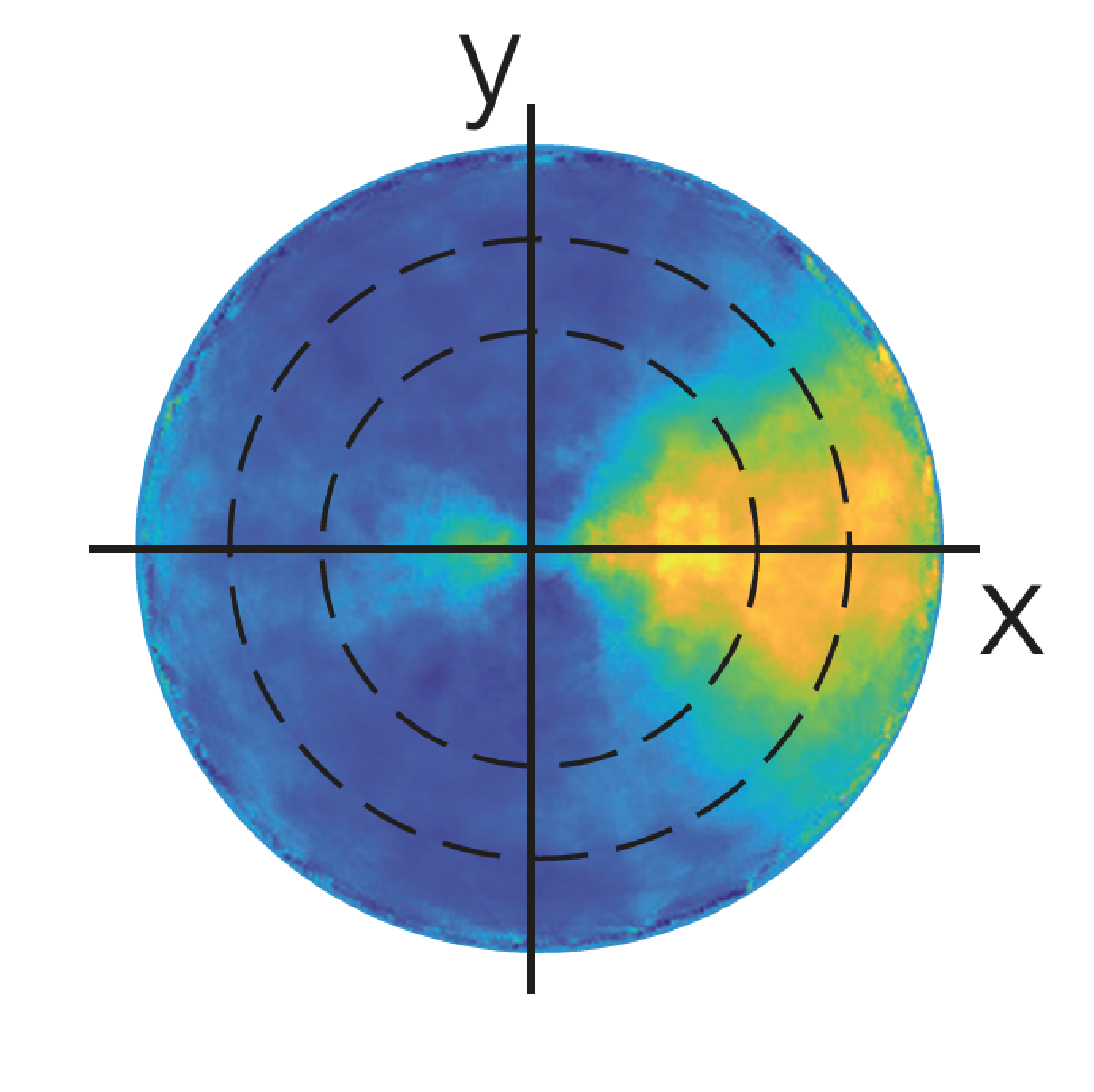
Estimating the attention window with fMRI
This project shows that people can not only focus their attention on a single spot, but also widen or narrow the area they pay attention to in their visual field, much like adjusting a spotlight or zoom lens. We analyzed brain activity with fMRI while people changed the size and location of their attentional focus, and developed a method to track how and where attention is distributed in the brain. This reveals that our brains dynamically adapt the “width” of attention to fit the task at hand. Published in eLife (2025) | [paper] | [PDF]

Temporal dynamics of tactile responses
This project investigates how tactile perception adapts to repeated or sustained stimuli over time. We find that both touch and vision use similar neural principles to process changing information. Using brain recordings (iEEG) and neuroimaging (fMRI), we find that a computational model that takes into account the temporal history accurately predicts how the somatosensory cortex responds to repeated tactile stimulation, helping explain how sensation adapts and recovers in the brain.
Published in Journal of Neuroscience (2026) | [paper]
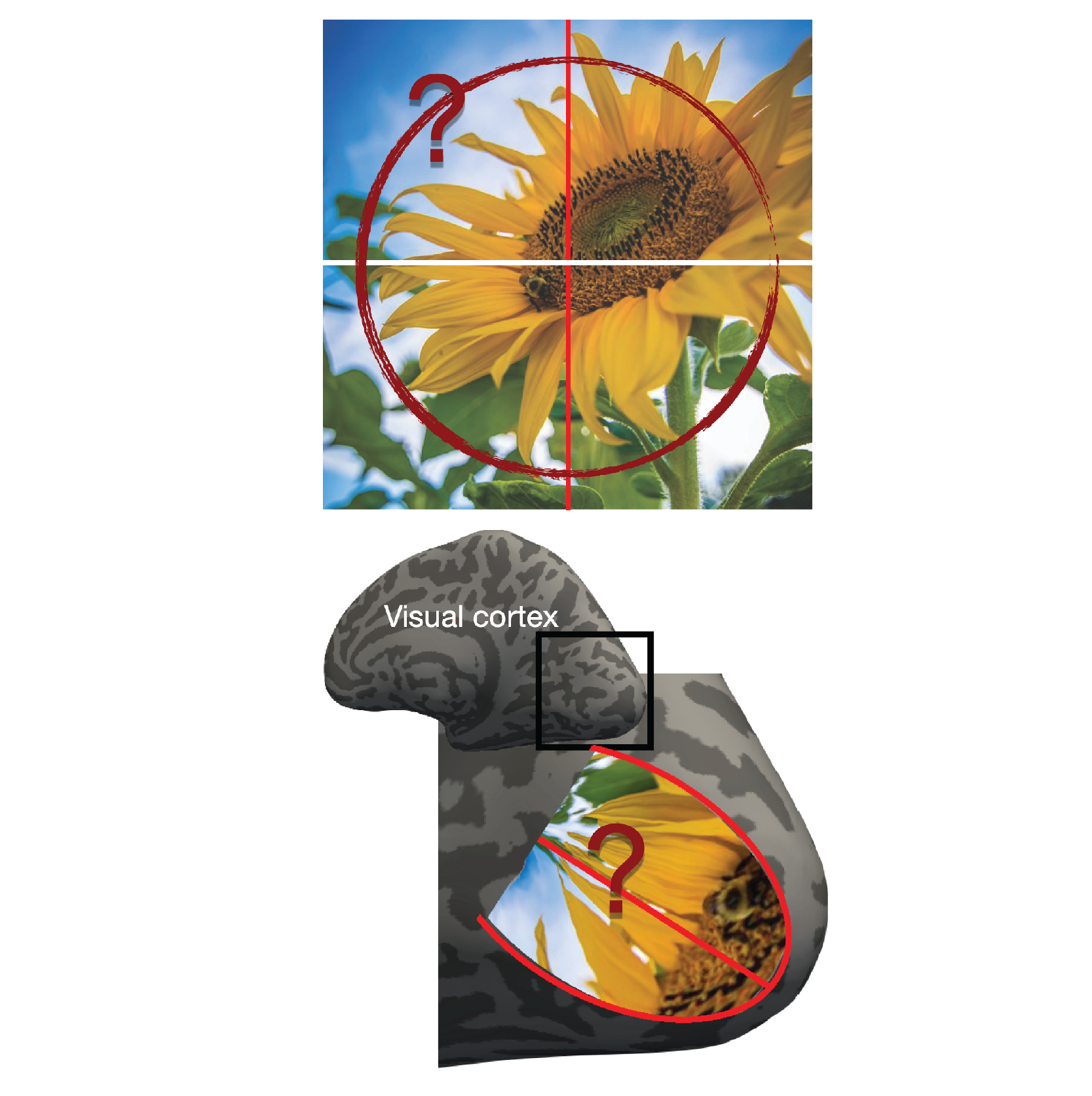
Mapping spatial precision in the visual field
This project investigates how precise people can report locations that are always the same distance from where they are looking. Using both behavioral experiments and fMRI, we link the precision of these spatial judgments with how the brain represents those locations.
Presented at Vision Sciences Society 2024 | [pdf]
PUBLICATIONS
For a full list of my publications see my Google Scholar profile
A delayed normalization model explains temporal dynamics in human somatosensory cortex
Bloem* IM, Li* L, Badde S, Groen IIA, … Landy MS, Winawer J (2026). Journal of Neuroscience. [*shared co-first author]
Link to paper | data and code
Model-based estimation of the population contrast response function in human visual cortex
Vinke LN, Ling* S, Bloem* IM (2026). Journal of Vision. [* shared co-senior author]
Link to paper | pdf | data and code
Dynamic estimation of the attentional field from visual cortical activity
Bloem* IM, Bakst* L, McGuire JT, Ling S (2025). eLife. [*shared co-first author]
Link to paper | pdf | data and code
How does orientation-tuned normalization spread across the visual field?
Klímová M, Bloem IM, Ling S (2025). Journal of Neurophysiology.
Link to paper | pdf | data and code
Normalization by orientation-tuned surround in V1-V3
Fang Z, Bloem IM, Olssen C, Ma WJ, Winawer J (2023). PLOS Comp Bio.
Link to paper | pdf | data and code
Attention preserves the selectivity of feature-tuned normalization
Klímová M, Bloem IM, Ling S (2023). Journal of Neurophysiology.
Link to paper | pdf | data and code
Saturating Nonlinearities of Contrast Response in Human Visual Cortex
Vinke* LN, Bloem* IM, Ling S (2022). Journal of Neuroscience. [*shared co-first author]
Link to paper | pdf | data and code
The specificity of orientation-tuned normalization within human early visual cortex
Klímová M, Bloem IM, Ling S (2021). Journal of Neurophysiology.
Link to paper | pdf | data and code
Normalization governs attentional modulation within human visual cortex
Bloem IM, Ling S (2019). Nature Communications.
Link to paper | pdf | data and code
Visual memories bypass normalization
Bloem IM, Watanabe YL, Kibbe MM, Ling S (2018). Psychological Science.
Link to paper | pdf
Attentional modulation interacts with orientation anisotropies in contrast perception
Bloem IM, Ling S (2017). Journal of Vision.
Link to paper | pdf
The impact of interference on short- term memory for visual orientation
Rademaker RL, Bloem IM, De Weerd P, Sack AT (2015). Journal of Experimental Psychology: Human Perception and Performance.
Link to paper | pdf | data and code
Intensive tool-practice and skillfulness facilitate the extension of the human body schema beyond first order limitations
Rademaker RL, Wu D-A, Bloem IM, Sack AT (2014). Neuropsychologia.
Link to paper | pdf
Scrutinizing visual images: The role of gaze in mental imagery and memory
Laeng B, Bloem IM, D’Ascenzo S, & Tommasi L (2014). Cognition.
Link to paper | pdf